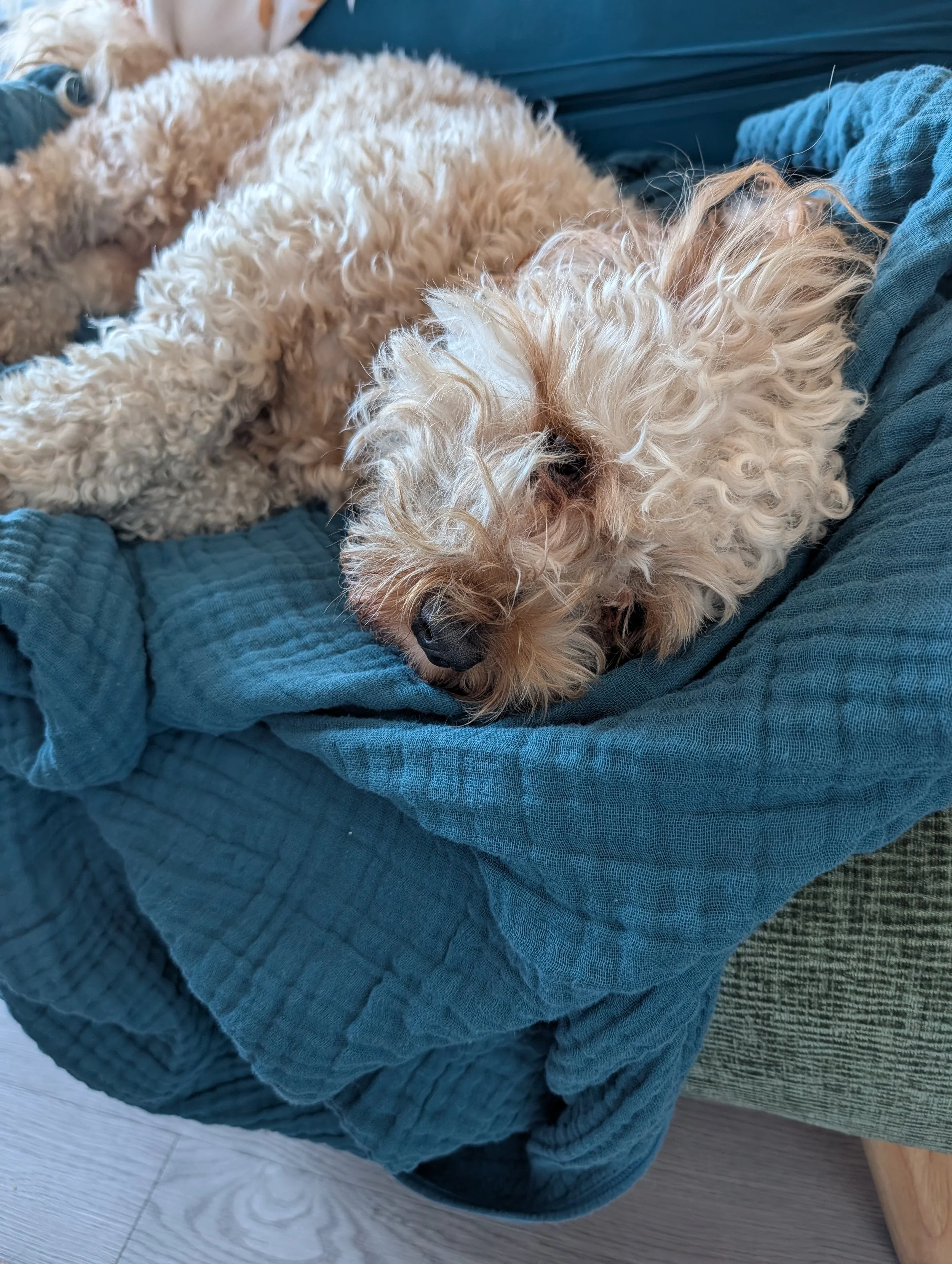
Your Dog Does Not Need Constant Entertainment
Your Dog Does Not Need “More”
At some point, a lot of dog owners accidentally become full-time camp counselors. Another walk. Another toy. Another outing. Another enrichment activity. Another attempt to “burn energy”, meanwhile you are quickly burning out trying to come up with all of these ideas.
And somehow, despite all of it, the dog still seems restless. They pace the apartment. Follow you from room to room. Demand attention five minutes after a long walk. Suddenly get the zoomies at 9 p.m. after a full day of activity. Meanwhile, you are sitting there wondering if you are somehow failing your dog because they are not mentally fulfilled every second of the day.
Modern dog ownership has become a little intense. Somewhere along the way, people started believing that every moment of a dog’s life should be stimulating, enriching, social, productive, or optimized. And while enrichment absolutely matters, there is a difference between a healthy, fulfilled dog and a dog that never truly learns how to settle.
Sometimes the problem is not lack of stimulation. Sometimes the problem is too much of it.
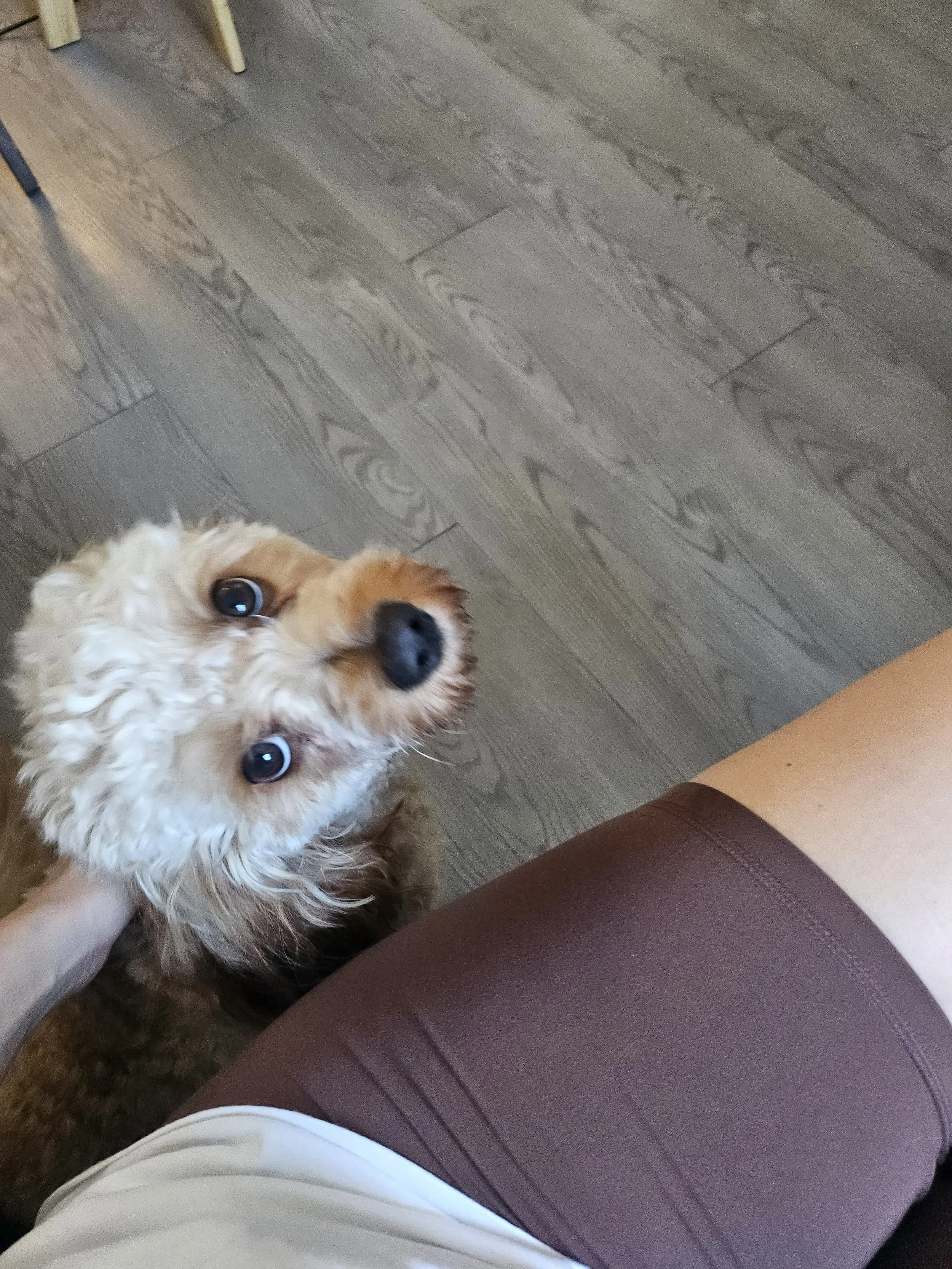
Why So Many Dogs Seem Hyper All the Time
A lot of dogs today live in a constant state of anticipation and stimulation. Something is always happening around them, toys spawn randomly, guests come over, the leash comes out unexpectedly. Dogs go from daycare, to dog parks, to busy walks, to crowded stores, to endless games of fetch. Even positive excitement still activates the nervous system. We definitely don’t mean for this to happen but all the environmental stimulation easily adds around us.
That does not mean these things are bad. It just means more stimulation does not always lead to “tired” for some dogs. Some dogs get so used to constant engagement that they stop knowing how to relax on their own. Every little movement becomes an opportunity for fun. Every sound means something exciting might happen. Every person is the most exciting thing. Every moment of boredom feels unbearable. It’s very easy for my dog, Mako, to get hyper and overly excited, especially living in an apartment complex in the middle of a city because of these small moments throughout everyday life.
You can usually spot pretty quickly when your dog is getting to their limit by watching over time. The dog cannot lay down for more than a few minutes without getting back up. They wander the house looking for something to get into or play with, nosing around. They demand interaction constantly with cold wet noses coming out of no where. Then the little razor sharp teeth come out and they’re pulling at your sock, nibbling on your hand, earning their Shark name. They become more hyper after activities instead of calm or tired. Teach your dog to settle, and remind them it’s the default.
Rest is a Skill You Can Teach
This is something a lot of people never hear when they first get a dog, so let me tell you that rest is not always automatic to dogs. You need to teach them how to settle down, regulate themselves, and even how to cuddle on the couch. Especially for puppies, adolescent dogs, high-energy breeds, or dogs living in busy environments, relaxation is often something that has to be practiced just like leash walking or recall.
This is also why I am a huge advocate for crate training dogs even if you don’t plan to be away from them for long periods of time. It helps teach them such calm habits and regulates their nervous systems in the best way. Calm behavior is still behavior, and it needs to be taught. Dogs repeat the behaviors that become part of daily life.
If every exciting moment gets attention, engagement, movement, or stimulation, the dog naturally starts seeking more and more of it. When calmness becomes normal, dogs slowly begin learning that rest is normal. Teach your dog how and when to settle in a way that fits your life.
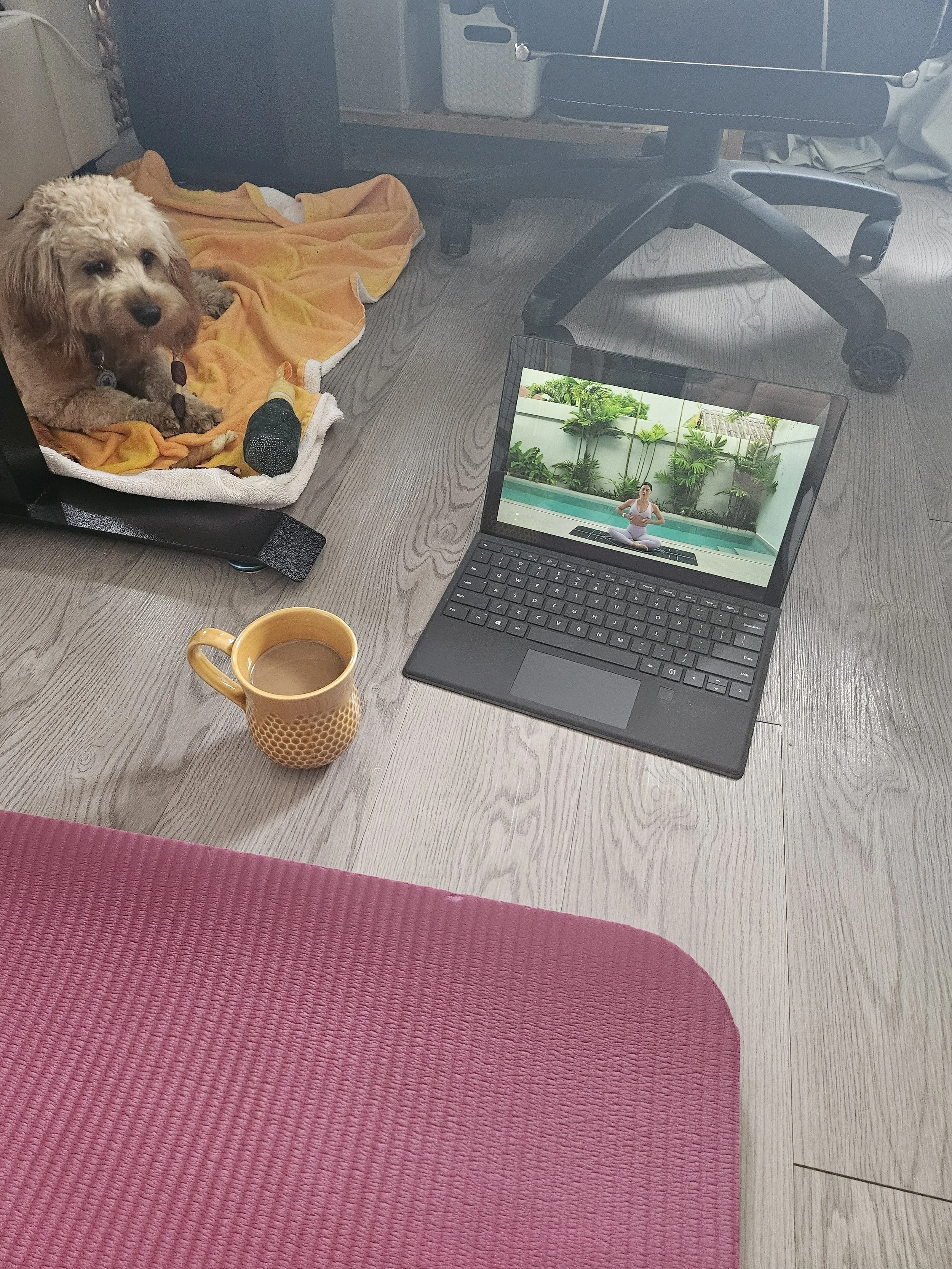
When I get out my yoga mat, Mako knows it is time to go to his mat. Those are the environmental cues your dog is constantly looking for. Once your dog becomes comfortable with a good settle command and starts experiencing more structure, predictability, and rest, they slowly begin learning how to settle on their own too.
More Activity is Not Always the Answer
If you’re not careful you can accidentally create a little canine athlete, one that you question their involvement in performance enhancement drugs due to their attitude. All the training videos online make people start to think this is the level of activity, and perfection, they need to maintain all the time. Unless you are raising the next Spitfire, or Olympian, that level of tough and strict training is not needed. I promise.
It’s important to know every breed has different exercise, stimulation, and recovery needs. You can always speak with your vet, or certified dog trainer if you need help narrowing this down outside of your own research. Understanding both the minimum and maximum amount of stimulation, in addition to exercise, your dog can realistically handle is important. Your dog is like a toddler, learn to recognize the moment you see the tired meltdown coming. That way you can intervene before the terror starts. Mako get’s really wide excited eyes, gets jumpy, and his breathing rate increases a small amount. That’s his edge, before the limit is met.
A calm dog is usually not created by exhausting them into temporary silence. A calm dog is usually created through routines, boundaries, predictable rest, and repetition over time. It’s also why some dogs come home from busy outings acting completely insane instead of tired. They are overstimulated, overtired, and still trying to process everything they just experienced. Humans do this too, honestly. You know that weird wired feeling after a chaotic day where you are exhausted but somehow cannot relax? Dogs can experience a version of that too.
What Actually Helped My Dog Calm Down?
Two things made the biggest difference for us: a good place or settle command, and building patience and impulse control checkpoints into everyday. If you need help teaching a good place cue and are not sure where to start, head over to the Freebie page.
There are more opportunities to work training into your day than most people realize, which is great because eventually it stops feeling like “training” at all. Try paying attention over the next few days to the moments that feel difficult with your dog. Is it walking back through the door with your hands full? Does your dog burst into the backyard like they just rage quit corporate? Does the elevator suddenly become a mosh pit at Warped Tour?
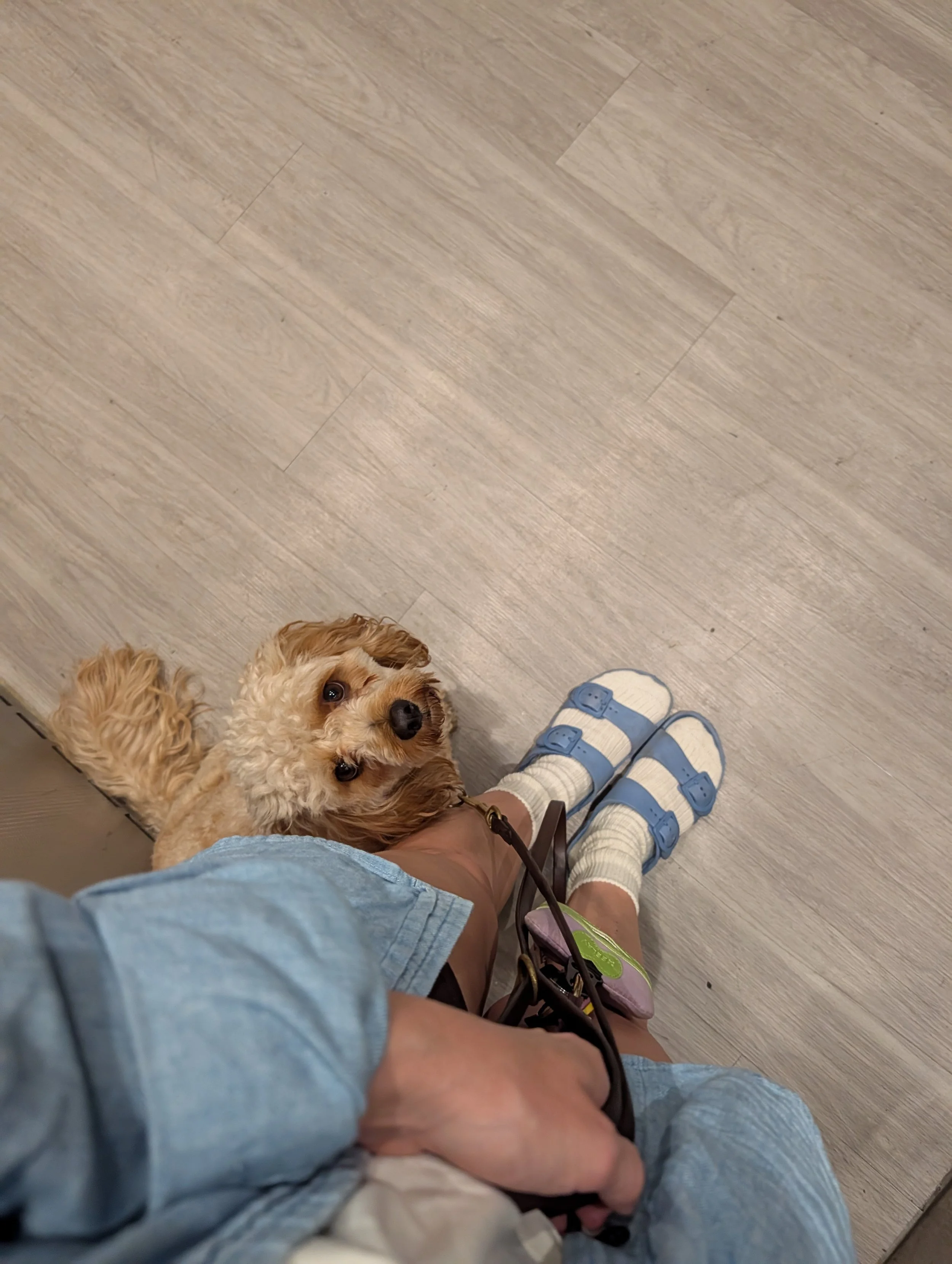
Those are the moments where calm is taught. Waiting at doors and walking through with you. Sitting calmly while the leash comes off waiting for release. Quiet time in their crate during the day even when you’re home. Not interacting with every person and dog we pass outside. When we come back inside, Mako sits off to the side and waits for his leash to come off and for his release cue before getting treats. He’s learned to sit next to me in the elevator and not to have a party every time the door opens. Those tiny repeated moments slowly become your dog’s normal.
Start Small, that’s all it takes. One small change, one small moment.
You don’t have to treat every moment like you’re hosting your dog. It is okay for them to be bored sometimes. It is okay for them to rest. It’s emotionally regulating for them to learn how to exist peacefully without constant stimulation. Honestly, I think it is something we have moved away from a little as a society in general. And our dogs mirror us more than we realize. If you settle, they settle too. Spend a few quiet moments each night simply sitting calmly with your dog. No training. No stimulation. No constant entertainment. It does wonders for their nervous system and your bond.
Life is not always perfect, and neither is dog training. I cannot give 100% every single day, but being able to see that I gave Mako consistent opportunities to learn helps keep me from pouring too much into the cup. Your dog won’t be perfect either. There will absolutely be days where your dog acts like you never taught them a single thing (their entire third year on this planet). That’s normal. Sometimes the goal is simply creating a dog that finally feels calm enough to rest so you finally can too.
If you need a little help getting there, start here with my Free Calm Dog Starter Kit. Shop our favorite Calm Dog Essentials that help achieve calm behaviors on Amazon!