Why Your Dog Follows You Everywhere (And What They Actually Need)
Mako doesn't really follow me around the house. He just... appears. Like a little Victorian ghost with big brown eyes, silently, yet judgmentally supervising everything I do. I'll check behind me before carrying a laundry basket, turn around five seconds later, and somehow he's there again. I don't know how he does it. He’s like a video game menace spawning at certain triggers around me, I swear.
But he's also haunting me, tripping me, and making every household chore a team project I never signed up for. If you have a dog like this, you probably know exactly what I'm talking about. Your dog isn't trying to make folding laundry harder nor are they're plotting how to stand in the exact place your foot needs to go next. Most of the time, they're simply responding to the environment they've learned. And that means the solution usually isn't more exercise, more toys, or more entertainment.
It's a little more structure.
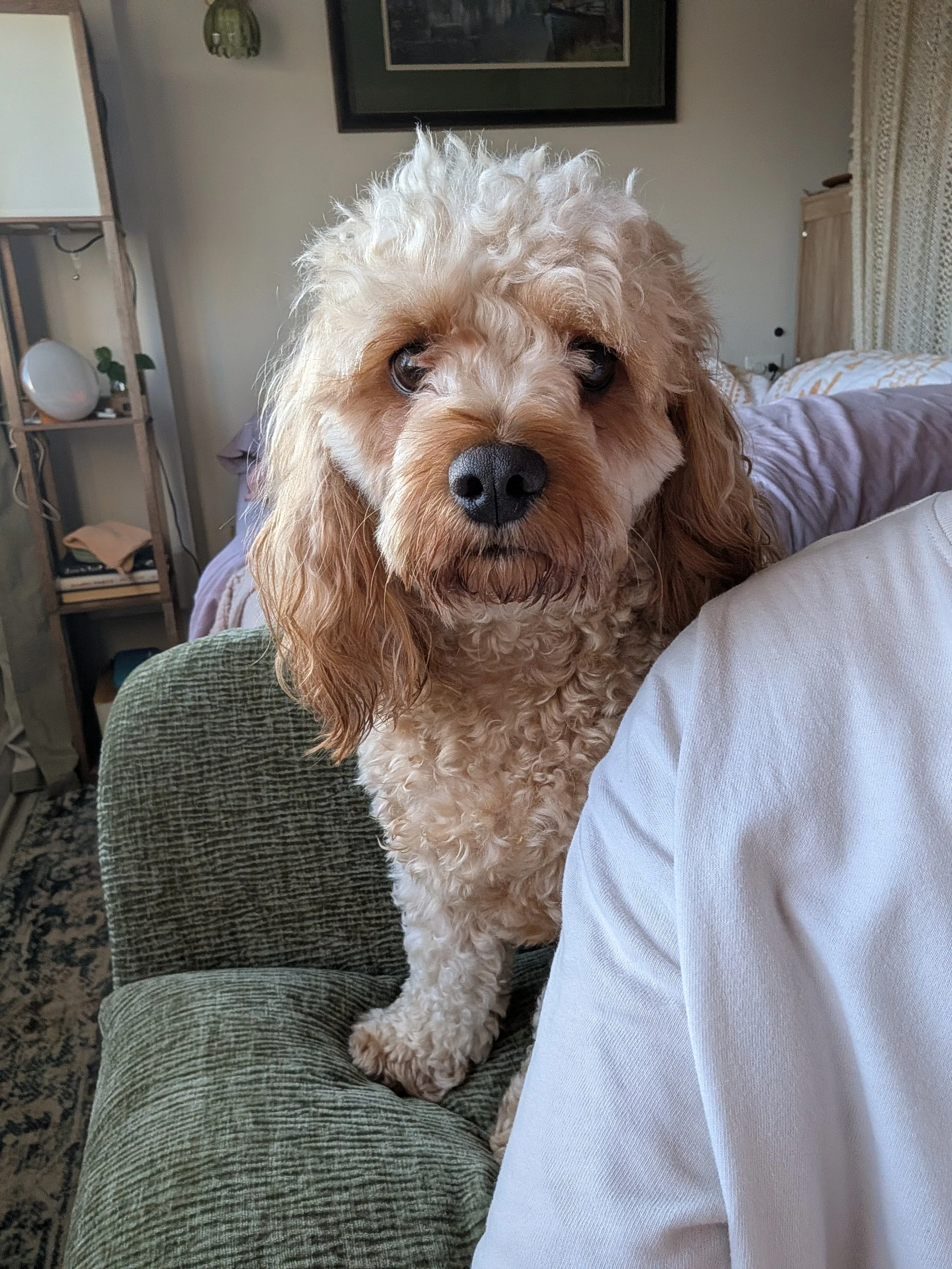
Mako literally staring over my shoulder as I write this.
Your dog isn't just following you—they're following the pattern
Dogs are incredibly good at recognizing routines, even when one was not specifically created for them. Without realizing it, we often become the routine. When we stand up, something happens. When we walk into the kitchen, drinks or food appears. When we head toward the front door, it's time somewhere or someone is coming over. When we pick up a dog toy from the floor, the fun begins. Over time, our dogs learn that our movement predicts the next event. So they stay close. Not because they're being difficult or trying to invade your personal space with their cute little nose. It’s because you've become the most reliable source of information in the house.
The mistake most of us make
When our dog follows us everywhere, our first instinct is usually to assume they're bored. So we try to fix it by doing more. More walks, more toys, more games, more interaction, and more attention. Sometimes those things are absolutely appropriate. Dogs need physical exercise, mental enrichment, and quality time with us. But it’s also important for dogs to learn certain skills:
How to rest.
Not every moment requires participation.
It's okay for life to happen around them without needing to be involved in every single part of it.
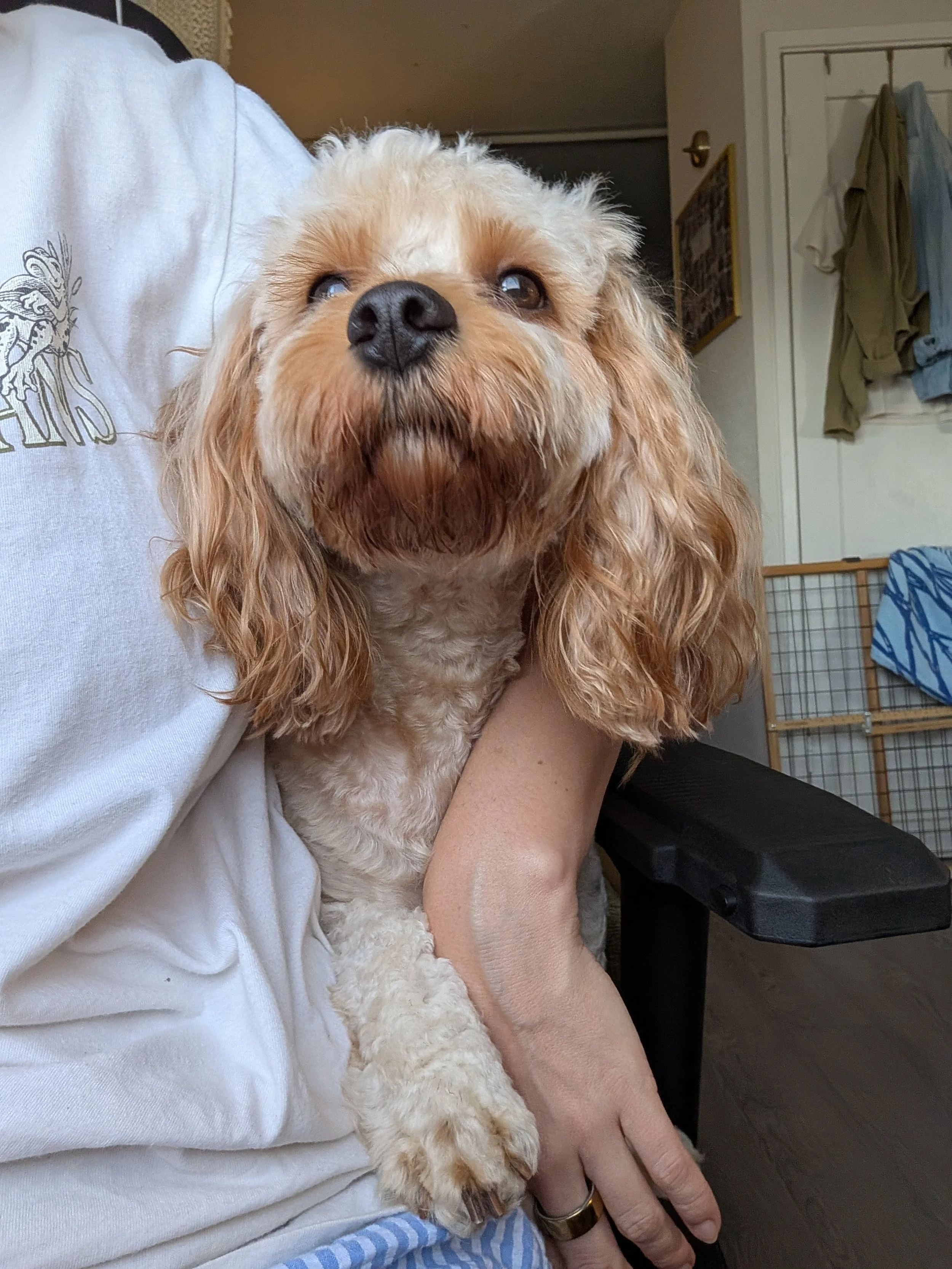
One of the biggest shifts I've had as a dog owner is realizing that I don't need to keep Mako busy every minute he's awake. He doesn't need me to become the entertainment coordinator every time I stand up. He needs to know when we're doing something together—and when it's perfectly okay to simply exist in the same home. He could stand to learn about personal space, but… I secretly love him squeezing his little body into any free space next to me.
Living together is about clarity, not constant correction
One thing I've learned is that living with a dog isn't about constantly correcting unwanted behaviors. Positively reinforcing the right behaviors when your dog chooses to make them go a long way. Create an environment where the right choice becomes the easy choice. Then rewarding your dog when they make the right choice.
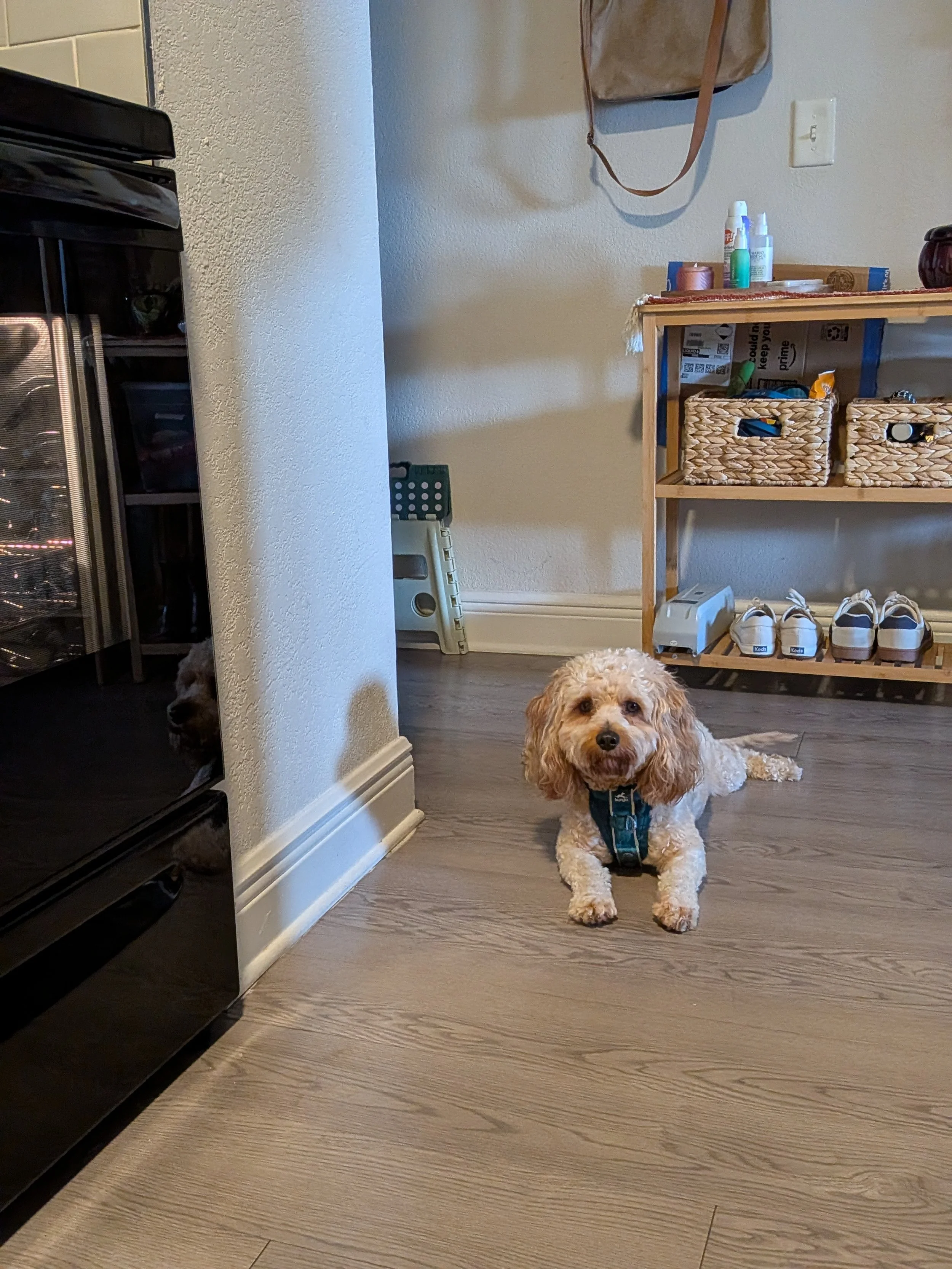
For example, if I am cooking and Mako comes to watch, he chooses one of two spots to lay on the floor: right in front of the sink and garbage can or just at the kitchen entrance. You can imagine which spot I prefer. When he chooses to lay in front of the sink he gets asked to move repeatedly. If he lays off to the entrance, I drop off little treats to let him know that is the better spot. Over time he started choosing the safer spot for the both of us.
If your dog doesn't know where they're supposed to be while you're cooking dinner, cleaning the house, or answering emails, they'll often make their own decision. Usually that decision is: "I'll just follow my human." They're not making a bad choice. They're making the only choice that makes sense to them. Sometimes we have to help show them.
Give your dog somewhere else to be
One of the easiest ways to reduce constant shadowing is by creating a clear "home base." That could be:
The goal isn't to send your dog away. It's to teach them that they have a comfortable, predictable place where they can relax while life keeps moving around them. If you haven't worked on this space yet, I put together a Free Calm Dog Starter Kit that walks through the foundations of crate training, place training, and creating a home that naturally encourages calm behavior. It's the exact starting point I'd recommend before worrying about more specific training.
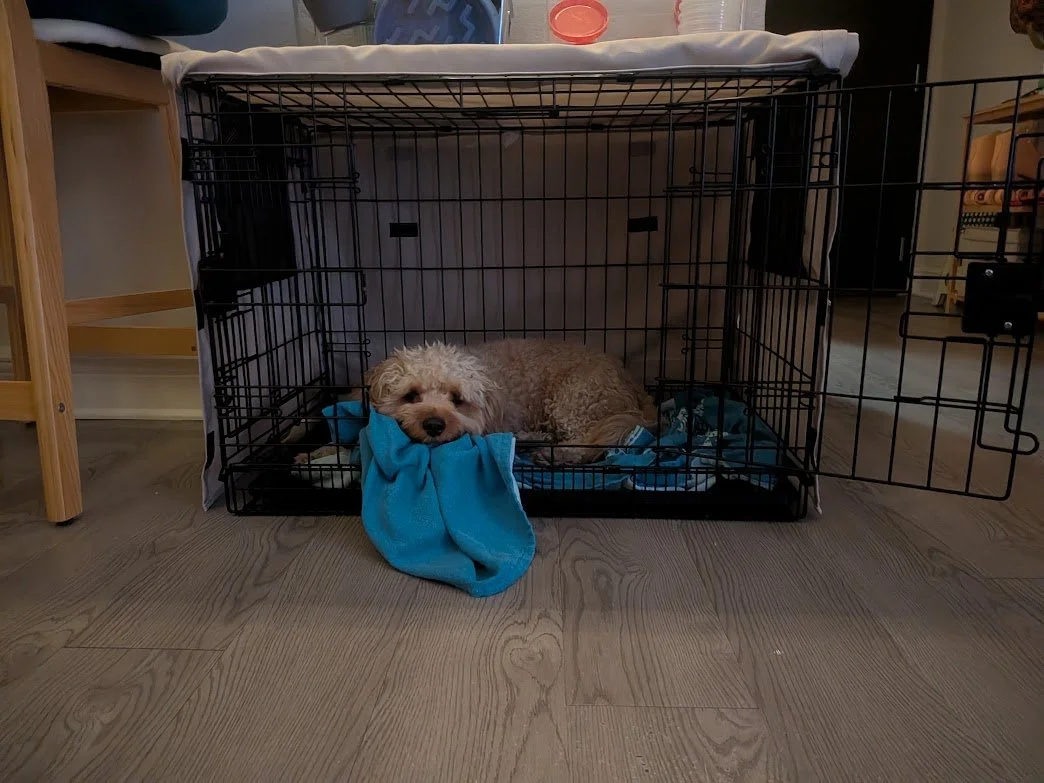
My sweet Mako has a few home bases, we live in a studio but it’s very important he gets his own space too. His first home base is his crate of course, big enough where he can fully lay down. I placed a crate cover over it to create the den like feeling dogs desire, but household towels and flat sheets work just as well. I keep a clean towel in the bottom, a safe chew toy, and I leave the door open all day so he can come and go.
His second spot in under my bed, strategically tucked away without using up more floor space. I tuck away his little bed (pictured below with cover) where he can still see the room and feel apart of things without being in the way. The final home base is a simple set of blue beach towels I can layout for him where ever we are. A home base doesn’t need to be anything extravagant and having a mobile option comes in handy.
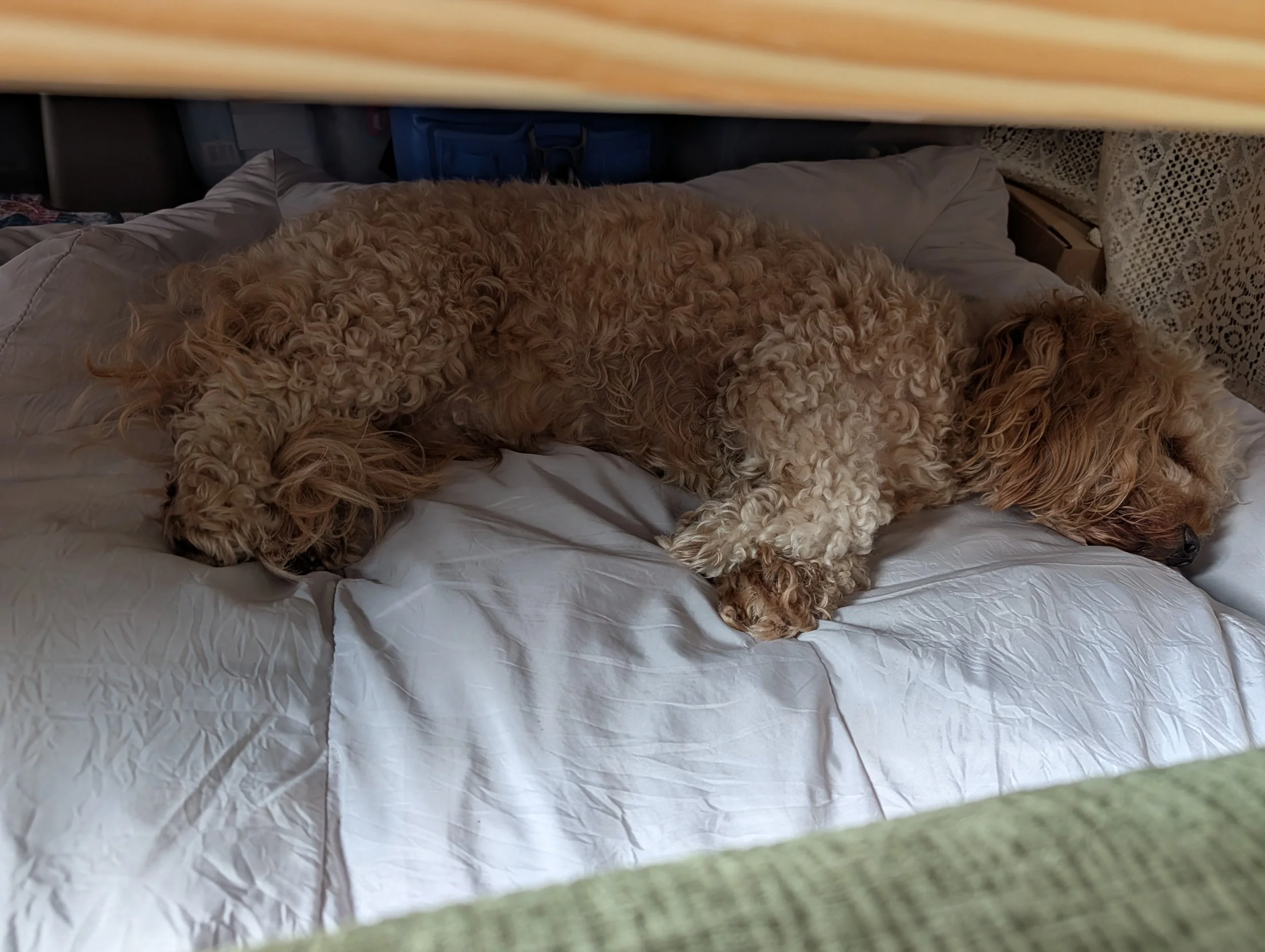
Mako’s bed has a washable cover, I was washing it when I took this photo. The padding inside is waterproof and made a great mat for him to lay on until the laundry was done.
Practice calm independence
One of the best things you can teach your dog is that your movement doesn't always require theirs. That doesn't mean ignoring them. It doesn't mean shutting doors or forcing distance. It simply means practicing everyday moments, separately. Fold laundry while they stay on their bed, walk by and give rewards so they understand this is right. Unload the dishwasher while they chew on a toy. Walk into another room and come back a minute later. Reward calm choices. Repeat often.
🐾 Mako’s Tip - Charlee Bear Treats sit great in pockets so they are always on hand.
Dogs don't learn independence through one big training session. They learn it through hundreds of small, predictable moments. These are tings you can work into your day without adding more. If your dog is struggling to pick up these habits, start by teaching “stay” or “place” to make things easier for both of you. If you need a little help - here are some great videos from trainers on Instagram I follow.
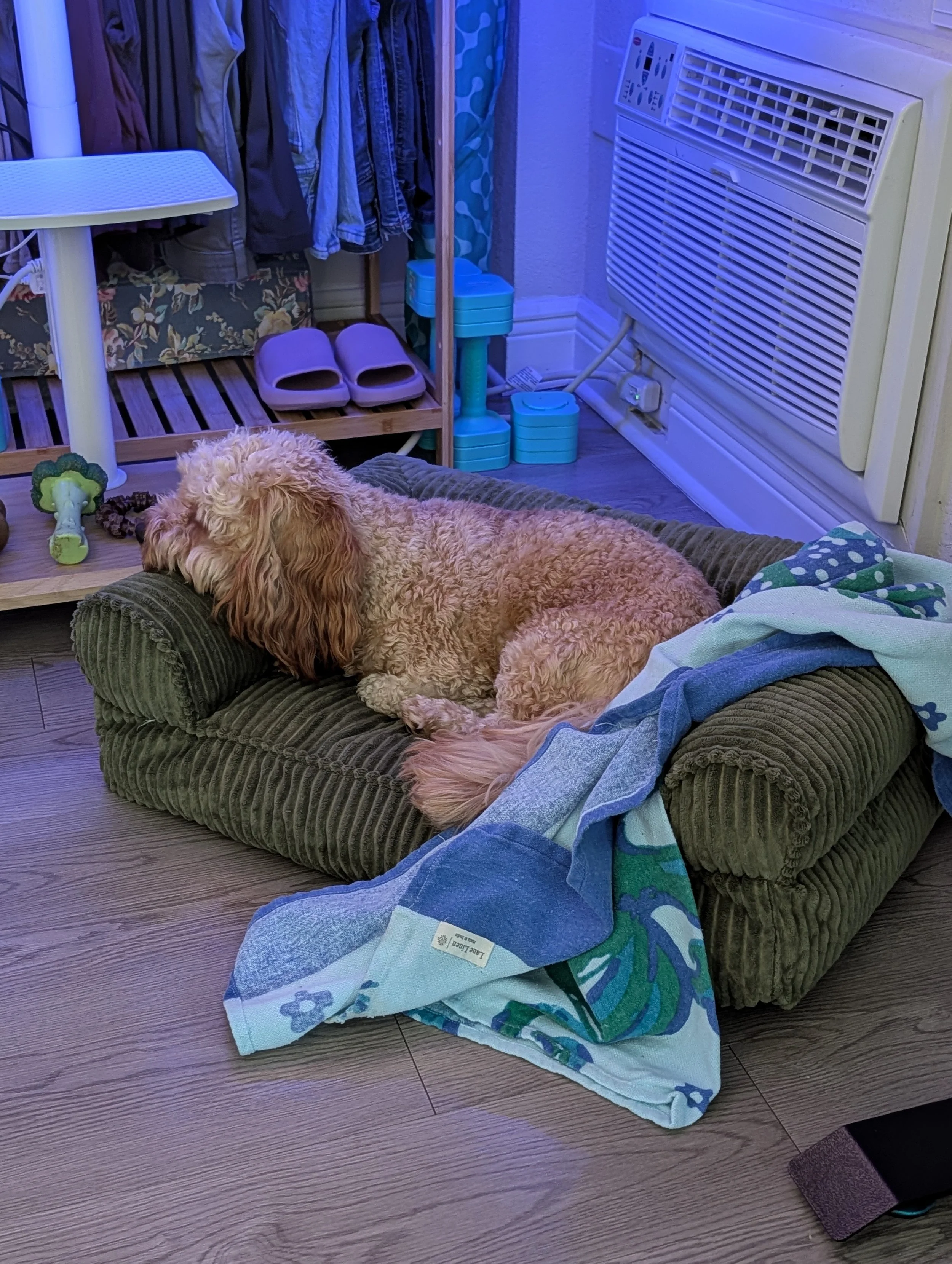
A calmer home benefits both of you
When dogs always feel like they need to monitor us, it can be exhausting for everyone. For them it’s because they feel constantly "on." For us, we aren’t getting space, we can’t move freely around our own homes and not get a jump scare like a horror movie. As structure becomes more predictable, something really nice starts to happen. Your dog begins choosing rest.
They stop getting up every single time you move. They become more confident making the choice to stay where they area. And your home feels a little more spacious. Staying in their own spot does not mean your dog loves you any less. They finally understand that not every moment requires their participation and every movement that occurs is not an invitation for them to join you.
Start Here
If your dog follows you everywhere, don't try to change everything overnight. You know by know that the name of the game is consistency. Start with a few simple actions:
Create one consistent resting spot
Reward calm behavior
Practice short periods of staying while you move around
Stay patient and consistent, rather than perfect
If you haven't already, I'd also recommend reading my first two posts: Your Dog Doesn't Need Constant Entertainment & You're Not Doing It Wrong—You're Missing a Simple System.
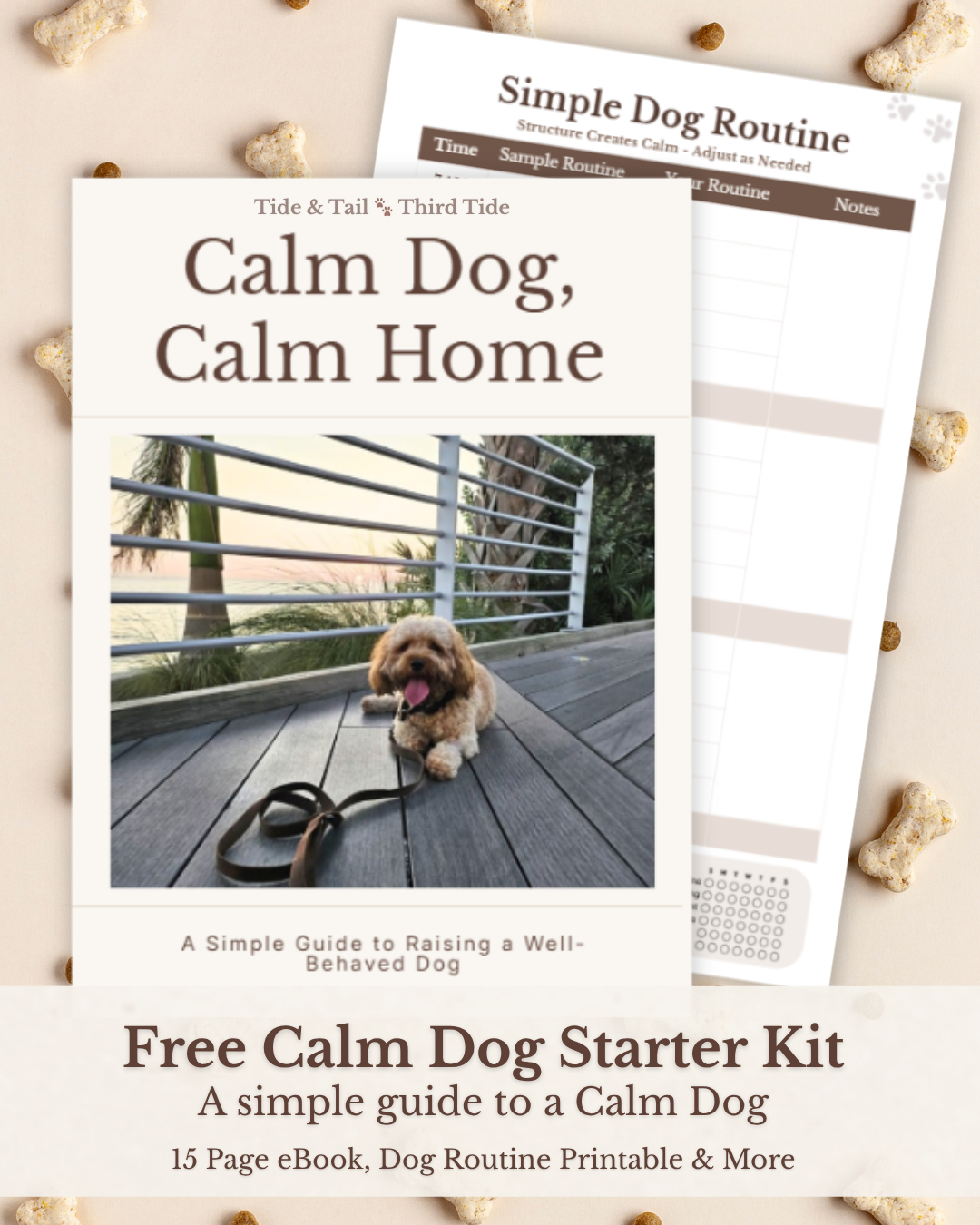
And if you haven’t download the free guide yet, what are you even doing? They lay the foundation for everything we talked about here. I’ve also put together a few lists on Amazon to help your find the right tools and products for your dog that support calm behavior. As an Amazon affiliate I can qualify to earn a commission at no additional cost to you. Just remember, raising a calmer dog isn't easy and it’s NOT about doing more. It's about creating an environment where your dog understands what comes next. And sometimes, the calmest home isn't the one with the quietest dog.
It's the one where everyone—human and dog alike—can finally relax.